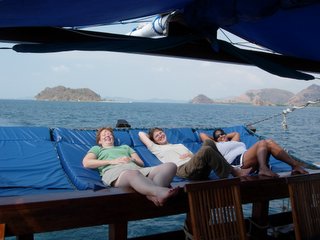
 Last week was the Idul Fitri holiday (the end of Ramadan, the Muslim month of fasting). I had the idea of going to the islands of Flores and Komodo, so when I heard that two teachers were already planning a trip we joined rather than create our own. They were going through a tour company, which I’d never done, but it seemed so much easier that we went along with it.
 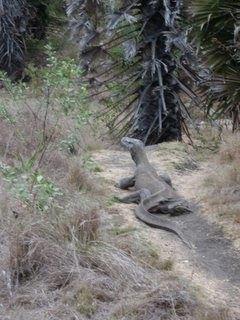 between. We landed on the West coast of
 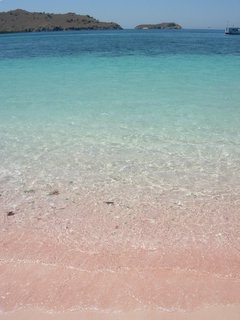 t was dark when we returned to the boat to play cards. We got up the next morning at sunrise and took another hike on Komodo island. There weren’t many dragons at all, but we did see lots of deer, wild boar, and some very cool birds. It was very hot but surprisingly fall-like with leaves crunching under our feet. Strange, since it’s currently supposed to be spring in the southern hemisphere. After our hike we cooled off in the ocean off the pink beach. The sand was an even mix of red and white grains with not a speck of trash, the water was tourquoise, and the current was cold so we saw a lot snorkeling. It was incredible. We could have stayed all week. Unfortunately, we only got to stay for a short time. We were off to a second beach on another island – there were hundreds of islands all around at all times. This beach was definitely not as nice. The snorkeling was good – I saw a huge eel with brown spots, but the current was very fast and the beach was dirty (Greg saw a hyperdermic needle. Ugh.) Back at the boat we (especially Greg) jumped off into the water until sunset, when we went back to the beach for a terrific tuna barbeque. On the way we watched thousands of fruit bats leave the mangrove island we were anchored next to. On the way back, the little motor boat lit up the phosphorescence in the water and it was totally amazing. The third day we woke up and immediately hoped in the water to snorkel towards the beach. It was amazing, and the beach was also beautiful (though not pink). I thought I’d found some sort of exotic species of nudibranch or something but they turned out to be blue-lipped clams hiding in the rocks. The fish were amazing and it would have been great to be on the other of the tour’s boats, the live-aboard diving boat, Felicia, which I’m sure cost a s
 mall fortune to stay on.
 ckly pressed on to lunch at 4:30. Poor planning on the part of whoever designed our itinterary. The guide answered Greg’s question about the stones by explaining that the water made them blue. A likely story. We had a good lunner? of Chinese sweet-and-sour fried fish and squid and finished with ice cream since we were waiting for the driver to return with lug nuts for the car. At around 8 we thought we were stopping for directions at a church, but found out we were staying with the Franciscan nuns (most of
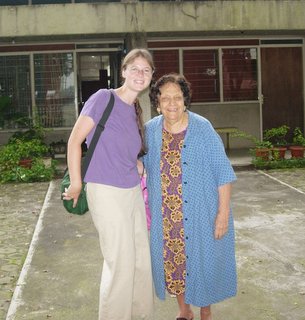
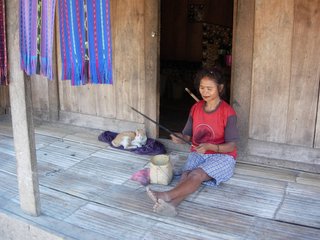
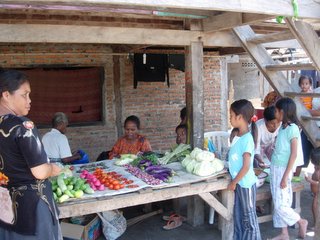
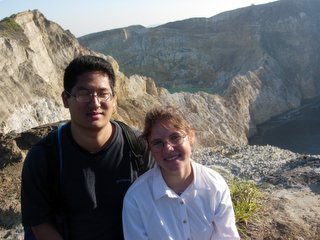 king on a door and assumed that was our guys. He spent the next 5 minutes or so banging on the door and yelling. Finally the driver emerged and without apology asked if we were all awake. We finally left close to 4 and had a very scary, fast drive around the side of the volcano in the dark as the driver tried to beat the sunrise. We were pretty surprised that there was a long hike up to the crater – though I suppose that’s obvious – so we hiked as fast as we could, only just missing the sunrise. It would have been too dark to see much, but it was a major bummer. We hung out at the lakes for a few hours. One lake was milky turquoise, the others were coca-cola colored. I guess the souls of the young go to one lake, the old to another, and the bad souls go to the third. That’s according to the sign. I met an old man selling tea and had a wonderful discussion about religion in Indonesian. I didn’t get much more insight on the lakes, but he did tell me that some scientists were able to take samples from the lakes every few months. It sounds like they change every 20-50 years due to dissolved mineral content from rainwater runoff and erosion. 50 years ago they were red, yellow, and blue. We finally left, stopping to eat the moldy bread and cheese the nunnery had packed us, then drove to a village which was preparing for a ceremonial feast later in the day. Of course we couldn’t stay, but the woman in the chief position took us into the ceremonial house and told us all sorts of things. It turned out that I was a better translator than our guide, and she said the lakes represent the spiritual progress of the people – they changed color when the villages became Christian and started wearing more ‘decent’ clothing. We bought several naturally-dyed ikat cloths from her – one a modern design which had the lakes in it, one a traditional tube sarong that has multiple uses, and a third with a traditional design that looks like flowers dyed mostly with mango bark and beetle nut. She gave us a pomelo for the road, we stopped at a beautiful beach for lunch (they were out of fish), then stopped at one more village which was preparing for a procession for St. Mary. It happened to be the same day as Idul Fitri, and the whole village was full of what looked like flower girls. We took a picture with some of the nuns, waved off the pushy cloth sellers, and went on to our last hotel, a dingy place by the north coast near the airport. The next morning we walked through the market and a fishing village, then flew back to
The great thing was that the whole time, people kept asking where we were from. With Greg and Clea in our group, we had lots of opportunities to explain about the diversity in